How to serve guests who don’t speak English: a guide for Vancouver Island cafés
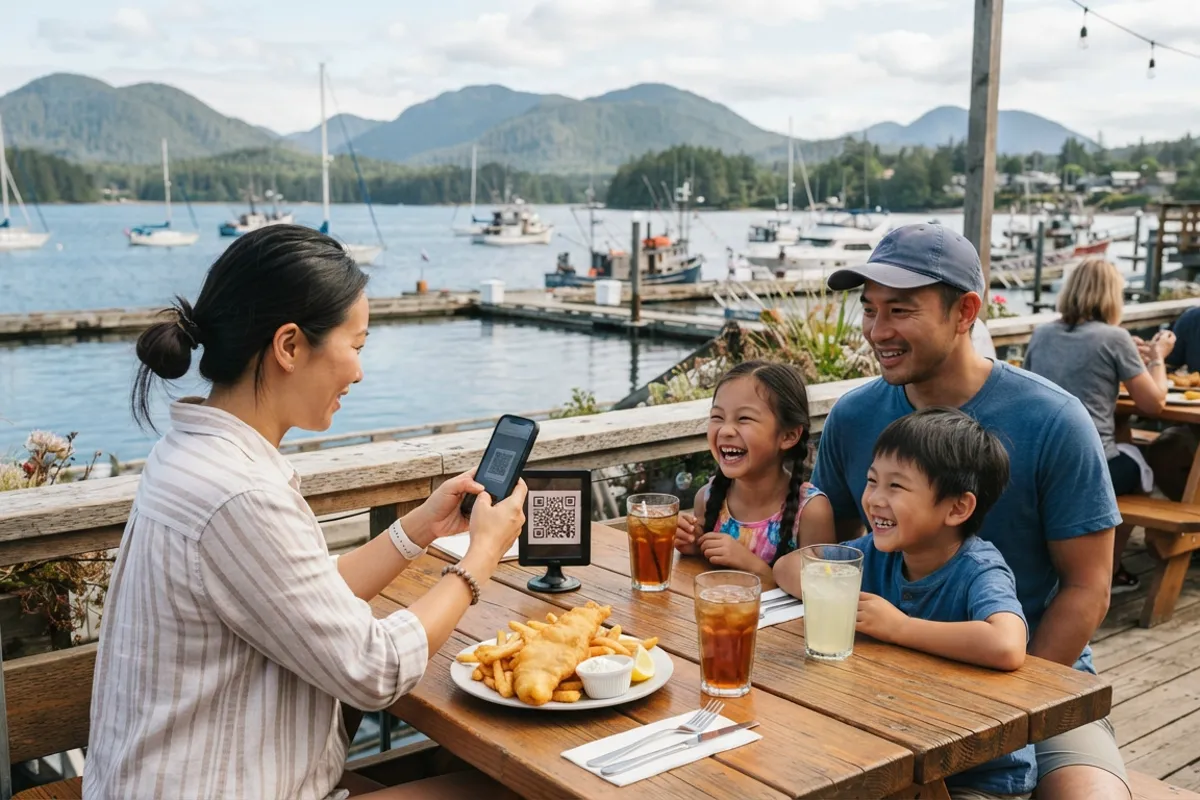
Picture a family from Seoul in your café in July. They point at the menu, smile, and order the one thing they recognise. Often it isn’t what they wanted.
How many guests does this affect?
- About 10.7 million people in Canada, nearly 3 in 10, can hold a conversation in a language other than English or French (Statistics Canada, 2021 Census).
- About 4.6 million speak another language most often at home. The most common are Mandarin, Punjabi, Cantonese, Spanish, Arabic and Tagalog.
- Vancouver Island welcomed about 4.4 million overnight visitors in 2014, and around a quarter of them came from outside Canada (Destination BC). It’s an older count, but tourism on the island has grown since.
Most of these people speak some English. But reading a menu in a second language is hard: “pulled pork”, “aioli” or a “Caesar” (the Canadian drink) mean nothing to many visitors.
Simple things that help
- Short descriptions. “Slow-cooked pork, BBQ sauce, bun” is easier than “Smokehouse Classic”.
- Photos. A photo is understood in any language.
- Allergens as icons. Nuts, gluten, dairy.
- A menu in other languages. You can print one or two extra languages, but your guests speak more than two. A QR menu shows the same menu in many languages, and each guest picks their own.
- One line from your staff. “Scan this for the menu in your language” is enough.
Which languages should you start with?
Look at who actually comes in. Ask your staff which languages they hear at the counter, and check where the people leaving you Google reviews are from. Start with the two or three you hear most, and add more later.